

Medicaid Asset Protection Trusts vs. Revocable Living Trusts: Key Differences

When families begin thinking about protecting assets and planning for long-term care, trusts often come up in the conversation. Yet not all trusts serve the same purpose. Two of the most commonly discussed options—Medicaid Asset Protection Trusts and Revocable Living Trusts—are frequently misunderstood.
While both tools play valuable roles in estate planning, they function very differently when it comes to Medicaid eligibility and long-term care costs.
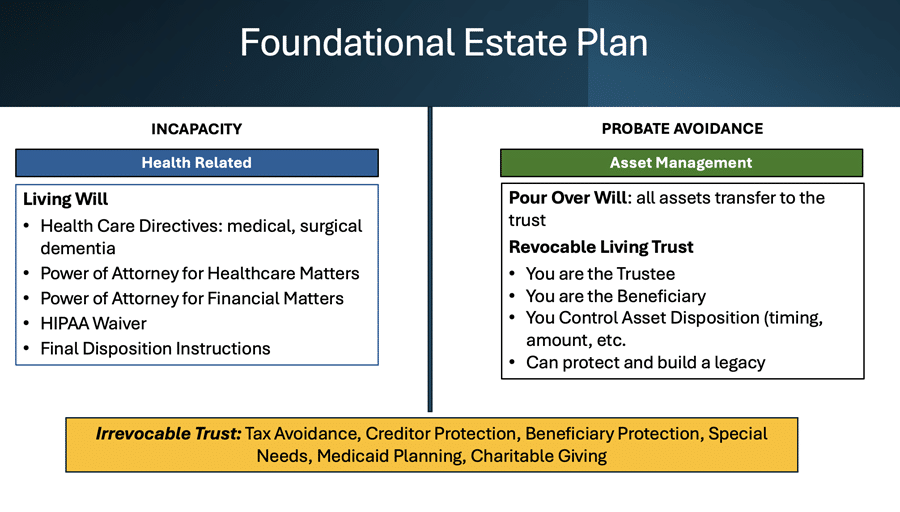
What Is a Revocable Living Trust?
A revocable living trust is a flexible estate planning tool that lets you maintain control of your assets during your lifetime. You can amend, modify, or revoke the trust at any time.
People commonly use this type of trust to avoid probate, streamline asset distribution, and maintain privacy. For many families, it serves as the foundation of a well-organized estate plan.
However, that flexibility comes with a trade-off. Because you retain control over the assets, Medicaid still considers them available resources. As a result, assets held in a revocable living trust are not protected from long-term care costs.
What Is a Medicaid Asset Protection Trust?
A Medicaid Asset Protection Trust (often called a MAPT) is specifically designed to help individuals qualify for Medicaid while preserving certain assets. Unlike a revocable trust, this type of trust is irrevocable.
Once you transfer assets into a MAPT, you generally cannot take them back or easily change the terms. That loss of direct control is intentional. It allows you to remove assets from your countable estate for Medicaid purposes, provided the transfer is made outside the five-year look-back period.
In exchange, you gain powerful protection. Assets in a properly structured MAPT are typically shielded from being spent down on long-term care.
Key Differences That Matter
The key distinction between these trusts is control versus protection. A revocable living trust prioritizes flexibility and ease of management, while a MAPT focuses on safeguarding assets from future care costs.
Timing also plays a critical role. You can create a revocable trust at any time without affecting Medicaid eligibility. In contrast, you must establish a MAPT well in advance of needing care to avoid penalties under Medicaid’s lookback rules.
Another difference involves income and asset use. With a revocable trust, you maintain full access. With a MAPT, you may still receive income from trust assets, but access to the principal is restricted.
These distinctions make it clear that one trust is not a substitute for the other. Instead, they serve different stages and goals within a comprehensive plan.
In Colorado, Medicaid eligibility rules are closely tied to both income and asset thresholds. A properly structured Medicaid Asset Protection Trust can help individuals preserve assets such as a home or investment accounts while still qualifying for benefits.
Colorado also follows the standard five-year lookback period, making early planning essential. For residents who already have a revocable living trust, transitioning assets into a MAPT must be handled carefully to avoid unintended penalties.
Additionally, Colorado recognizes spousal protections that may allow a healthy spouse to retain certain assets, which can be coordinated with trust planning strategies.
Choosing the Right Approach
No single solution fits everyone. The right choice depends on your goals, your health outlook, and how far in advance you begin planning.
Some individuals prioritize maintaining control and simplicity, making a revocable living trust the right starting point. Others are focused on long-term care planning and asset preservation, where a Medicaid Asset Protection Trust becomes essential.
In many cases, the most effective strategy involves layering these tools together within a coordinated estate plan.
Planning with Purpose
Understanding the difference between these trusts is more than a technical exercise. It is a critical step in protecting your financial security and ensuring access to quality care.
With thoughtful planning, families can avoid unnecessary loss, reduce stress, and Schedule a 15-minute discovery call today!
This article is a service of Life & Legacy Law. We don’t just draft documents; we ensure you make informed and empowered decisions about life and death, for yourself and the people you love. That’s why we offer a Life & Legacy Planning™ Session, during which you will get more financially organized than you’ve ever been before and make all the best choices for the people you love.
This material was created for educational and informational purposes only and is not intended as ERISA, tax, legal, or investment advice. If you are seeking legal advice specific to your needs, such advice services must be obtained on your own, separate from this educational material.